Key takeaways
- Select in the order alloy → flux → core count → diameter; do not start with diameter alone.
- Lead-free hand soldering commonly uses Sn-Cu, Sn-Ag-Cu and Sn-Cu-Ni-Ce; Sn63Pb37 remains available for leaded processes.
- Rosin-core, no-clean and water-soluble wires differ in residue and cleaning requirements; match them to the reliability class.
- Fine diameters suit small joints and dense components; thicker diameters suit large joints and fast heat dissipation.
- Lead-free wire melts higher; increase iron temperature modestly and shorten dwell time.
Solder wire selection comes down to four questions: which alloy, which flux, single or three-core, and what diameter. Many people start with diameter, but the alloy and flux determine the soldering window and residue; diameter mainly affects deposition rate and operator feel.
1. Choose the alloy
The alloy determines melting point, wettability, strength and regulatory suitability. Common choices for hand soldering and rework:
| Alloy (wt%) | Melting point (°C) | Characteristics and typical use |
|---|---|---|
| Sn63Pb37 | 183 | Eutectic leaded alloy; excellent wetting and wide window; leaded processes and rework |
| Sn-Cu0.7 | 227 | Low-cost lead-free; general hand soldering and wave touch-up |
| Sn-Ag3.0Cu0.5 (SAC305) | 217–220 | Balanced strength and wetting; precision electronics, connectors and rework |
| Sn-Ag3.5 | 221 | Near-eutectic; good thermal fatigue resistance |
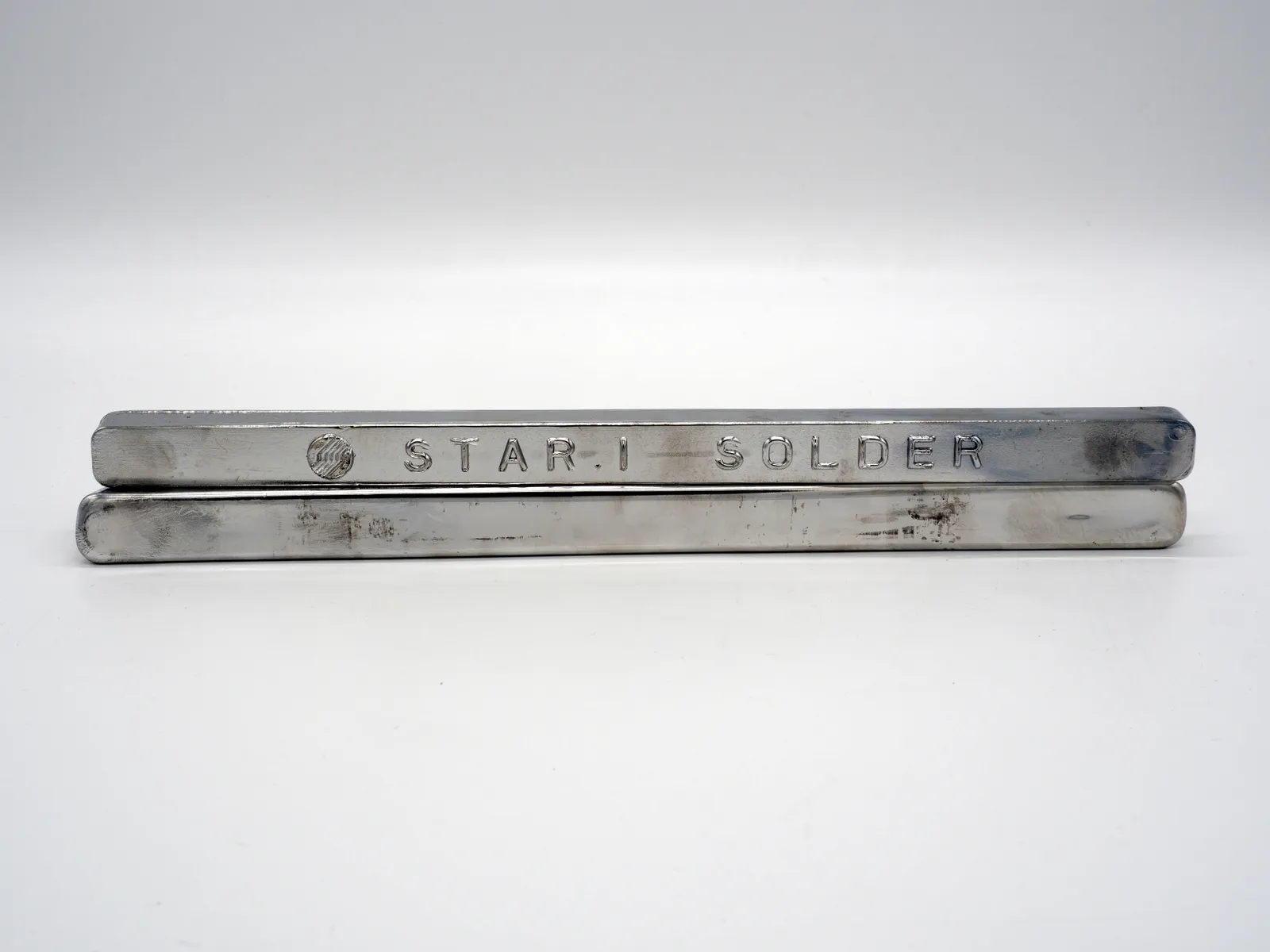
| Sn-Cu-Ni-Ce | 227 | STAR.I recommended lead-free system; pairs with wave/hot-dip soldering |
| Sn-58Bi | 138 | Low-temperature lead-free; heat-sensitive parts, assess brittleness |
Lead-free series control lead below 1000 ppm and cadmium below 20 ppm. Export products may need to meet additional market-specific regulations.
2. Choose the flux type
Flux removes oxides and promotes wetting. Common activity levels are R (non-activated), RMA (moderately activated) and RA (highly activated). By cleaning method, wire is available as rosin-core, no-clean or water-soluble.
| Type | Residue | Cleaning | Typical use |
|---|---|---|---|
| Rosin-core (R/RMA/RA) | Medium | Depends on activity | General hand soldering, rework, repair |
| No-clean | Low | Generally none | High-reliability no-clean assembly, volume hand soldering |
| Water-soluble | Water-removable | Warm water plus thorough drying | Processes requiring complete residue removal |
Higher activity means stronger oxide removal, but also more corrosive residue and greater cleaning requirements. Do not choose the highest activity just for “easier soldering”; match it to the reliability class and cleaning capability.
3. Single-core or three-core?
- Single-core wire: one flux core, simple construction, suitable for routine hand soldering and rework.
- Three-core wire: three flux cores, more even flux distribution, suitable for continuous soldering, longer seams and stable flux supply.
Flux content can be specified as standard, medium or low. For dense joints with strict residue requirements, consider low-content or no-clean formulations; for high thermal mass or heavily oxidised surfaces, evaluate higher activity or content.
4. Choose the diameter
Diameter affects feed rate, heat input and operator feel. General guidance:
| Diameter (mm) | Typical application |
|---|---|
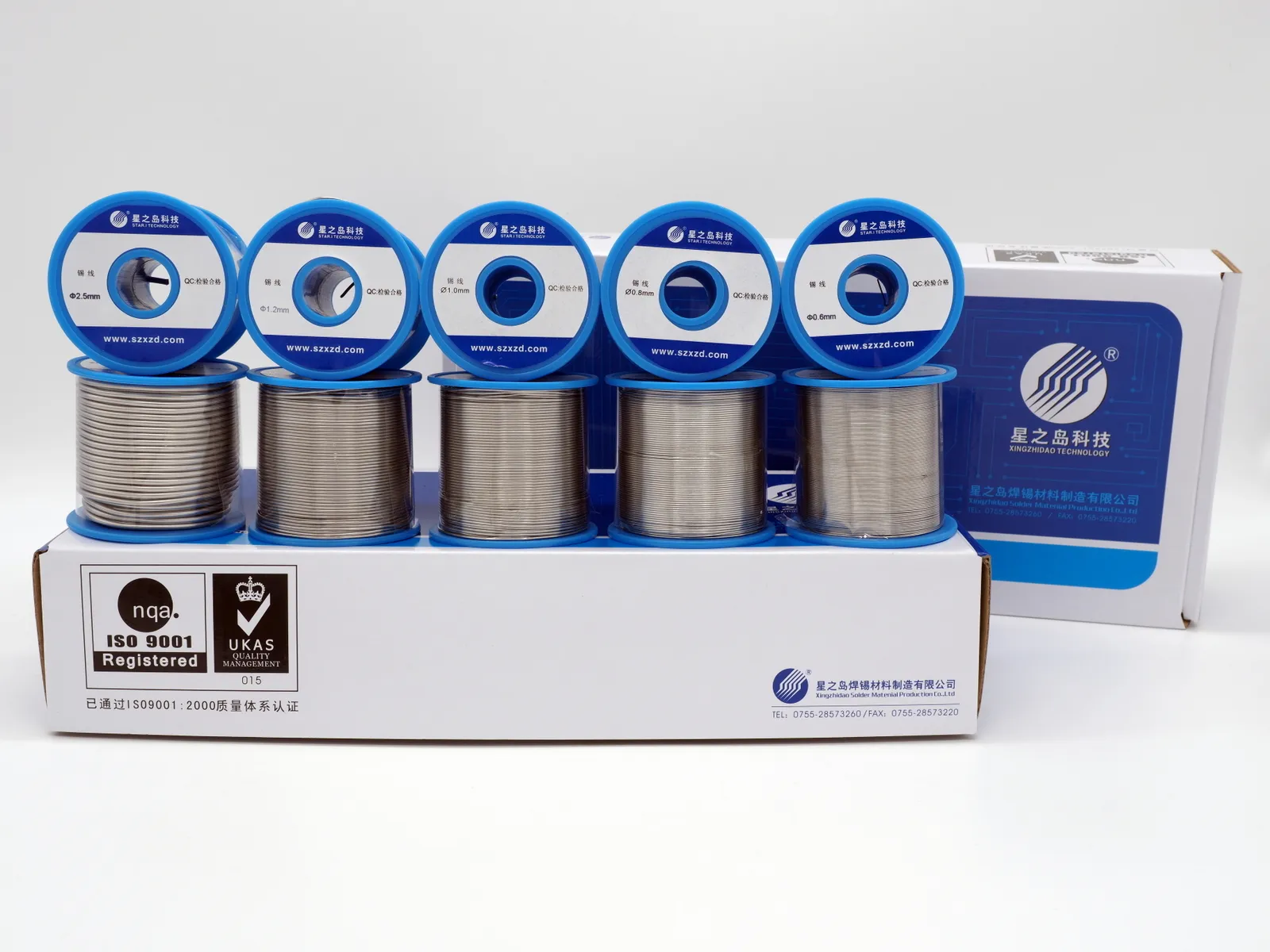
| 0.3 | Micro joints, fine-pitch components, precision rework |
| 0.5 | Precision electronics, connectors, small pads |
| 0.6 | General PCB hand soldering |
| 0.8 | Medium joints and through-hole components |
| 1.0 | Larger pads, ground joints, heat-dissipating connections |
| 1.2 | Large joints, wire and terminal soldering |
STAR.I standard diameters cover 0.3–1.2 mm, with 0.3–0.5 mm customizable.
Hand-soldering recommendations
- Iron temperature: adjust to the alloy, pad thermal mass and tip shape. Lead-free alloys melt higher and usually need a higher temperature than Sn-Pb, but avoid excessive heat that evaporates flux and damages pads.
- Dwell time: minimise heating time per joint and avoid repeated touch-up. For high thermal mass, heat the pad and lead together with the tip before feeding wire.
- Feed position: feed wire to the pad-to-lead junction, not directly onto the iron tip, so the flux is not burned off before reaching the joint.
- Tip care: clean the tip regularly and use the appropriate tip shape; decide on cleaning according to the flux type.
- Ventilation: hand soldering produces flux fume; keep the area ventilated and use fume extraction where needed.
Storage and safety
- Store in a cool, dry place away from moisture and direct sunlight.
- Separate and label different alloys and flux types to prevent mixing.
- Avoid inhaling flux fume; wash hands after contact.
- If water-soluble wire is cleaned with warm water, dry thoroughly to avoid moisture-related corrosion.
Conclusion
Select in this order:
- Alloy: meet melting point, reliability and regulatory requirements first.
- Flux: choose R/RMA/RA, no-clean or water-soluble based on residue and cleaning.
- Core count: three-core for continuous soldering and long seams; single-core for routine hand soldering.
- Diameter: 0.3–1.2 mm according to joint size and heat dissipation.
Share the joint type, component density, PCB finish and cleaning conditions with STAR.I’s technical team for a specific alloy, flux and diameter recommendation.
FAQ
What wire diameter should I use for hand soldering?
Use 0.3–0.5 mm for small joints, fine-pitch components and precision rework; 0.6–0.8 mm for general PCB hand soldering; 1.0–1.2 mm for large pads, ground joints and terminals. Confirm against joint size, tip shape and feed technique.
Does no-clean wire really need no cleaning?
No-clean wire leaves low residue and generally needs no cleaning. For high-reliability, medical, automotive or harsh-environment products, evaluate residue, insulation resistance and subsequent coating requirements.
What are the pros and cons of water-soluble wire?
Water-soluble wire solders quickly and gives bright joints; residue is readily removed with warm water, suiting processes that require thorough cleaning. The downside is the extra cleaning/drying step and corrosion risk if cleaning is incomplete.
Is three-core wire better than single-core?
Not necessarily. Three-core wire distributes flux more evenly for continuous soldering and longer seams; single-core is simpler for routine hand soldering. Choose by joint count, rhythm and flux content requirements.
Can lead-free wire directly replace leaded wire?
Re-validate the process. Lead-free wire melts higher and usually wets less readily than Sn-Pb; iron temperature, flux and dwell time need adjustment, and the board, components and regulatory requirements must be confirmed.
References
- STAR.I TECHNOLOGY solder wire product data (alloy, flux, core and diameter)
- STAR.I TECHNOLOGY solder products alloy and supply-form table
- JIS Z 3283 Resin-core soft solder
- EU RoHS Directive 2011/65/EU and amendments