Key takeaways
- R, RMA and RA increase in activity, and so do residue corrosiveness and cleaning requirements.
- No-clean does not mean zero residue; high-reliability products still need insulation resistance and ionic contamination assessment.
- For wave-soldering spray flux, check solids, acid value, halides, surface insulation resistance and specific gravity.
- Water-soluble flux suits processes that require thorough cleaning, but the assembly must be dried completely.
- Validate with a pilot run, joint inspection, insulation resistance and reliability testing.
Flux selection is not just “leaded or lead-free” or “no-clean or water-soluble.” Fluxes with the same activity level can behave very differently depending on solids content, halide content and process conditions.
This guide follows a practical order: activity level → cleaning method → key indicators → process fit.
What does flux do?
Flux removes oxide films and protects molten solder from re-oxidizing. A suitable flux should:
- Remove oxides from the base metal and molten solder surface;
- Activate in a temperature range that matches the alloy melting range;
- Promote wetting on the metals being joined;
- Leave low, non-corrosive residue;
- Provide high post-solder insulation resistance.
These five points match STAR.I product data and form a useful evaluation framework.
Activity levels: R, RMA, RA and RSA
| Level | Activity | Characteristics | Typical use |
|---|---|---|---|
| R | Low | Low residue, low corrosiveness | General electronics, no-clean |
| RMA | Medium | Balanced wetting and residue | Wave, hand soldering, rework |
| RA | High | Strong oxide removal, more corrosive residue | Difficult or heavily oxidized surfaces; cleaning required |
| RSA | Special | Customized for specific processes | Special customer or application requirements |
Higher activity usually means easier soldering, but also more corrosive residue and greater cleaning requirements. Do not choose the highest activity just to reduce defects; confirm the oxidation level, PCB finish and cleaning capability first.
Cleaning methods: rosin, no-clean and water-soluble
| Type | Residue | Cleaning | Typical use |
|---|---|---|---|
| Rosin | Medium | Depends on activity | General electronics, repair |
| No-clean | Low | Generally none | High-reliability no-clean assembly |
| Water-soluble | Water-removable | Warm/deionized water plus thorough drying | Processes requiring complete residue removal |
“No-clean” is a process design goal, not a guarantee of zero residue. For high-reliability products, evaluate surface insulation resistance (SIR), ionic contamination, electrochemical migration and compatibility with conformal coating.
Key indicators for wave-soldering flux
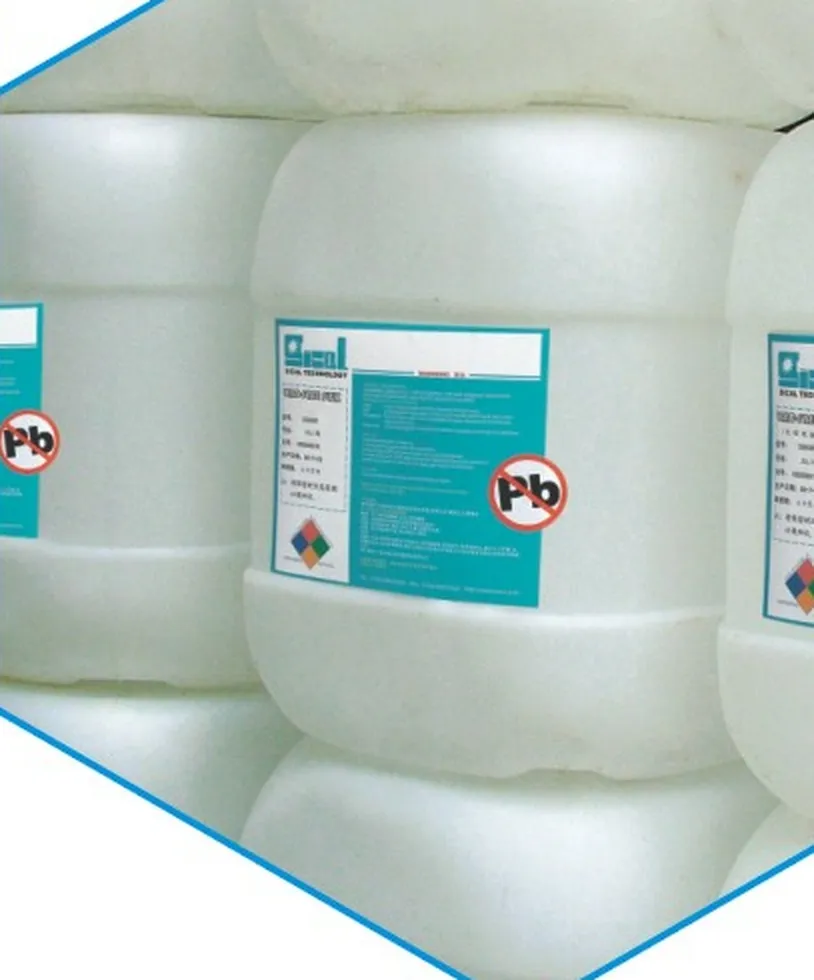
Using SICAL lead-free fluxes as examples, check:
| Indicator | What it tells you | Reference |
|---|---|---|
| Solids content | Residue level and wetting | CS805-A about 3.1±0.5%; CS505-2 about 2.0±0.5% |
| Acid value | Activity level | CS805-A 20±5 mg KOH/g; CS505-2 18±4 mg KOH/g |
| Halide content | Corrosiveness and halogen-free requirements | CS805-A <100 ppm; CS505-2 <0.01% |
| Surface insulation resistance | Insulation performance of residue | CS805-A >1×10¹⁰ Ω; CS505-2 >1×10⁷ Ω |
| Specific gravity | Spray volume and concentration | CS805-A 0.801±0.005; CS505-2 0.795±0.005 |
| pH | Stability and corrosiveness | CS505-2 4.6–5.0 |
Typical values; confirm against the current TDS and batch report. Test methods and limits vary by flux model.
Process fit: wave, hand and SMT
- Wave-soldering spray: focus on solids, acid value, halides, SIR and spray uniformity. Nozzle atomization, flux volume and preheat all affect residue.
- Hand soldering/rework: prioritize feel, fume, residue and cleaning convenience; rosin-core or no-clean wire is common.
- SMT reflow: the flux inside solder paste is formulated for the paste. Do not add unknown external flux; follow the paste datasheet.
- Difficult metals: stainless steel, nickel and aluminum need dedicated flux and usually cleaning. Do not force a general no-clean flux onto these surfaces.
Common mistakes
- “Higher activity is always better”: it may improve wetting but increases residue corrosiveness and cleaning cost.
- “No-clean means no attention needed”: high-reliability products still need residue and insulation assessment.
- “Halogen-free means environmentally friendly”: VOC, heavy metals, RoHS and occupational health still matter.
- “More flux is better”: excess flux increases residue, spatter and cleaning burden and can affect joint appearance.
- “Water washing is always clean”: incomplete cleaning or drying can accelerate corrosion.
Validation checklist
Before volume use:
- Pilot run with the actual PCB, components and process parameters;
- Joint appearance and wetting inspection;
- Residue inspection and cleaning effectiveness;
- Surface insulation resistance and ionic contamination testing (by product class);
- Electrochemical migration/corrosion assessment for high-reliability products;
- Compatibility with conformal coating, adhesive and test;
- Batch consistency and TDS confirmation.
Conclusion
Select in this order:
- Activity level: R/RMA/RA/RSA based on oxidation and difficulty.
- Cleaning method: no-clean, rosin or water-soluble, matched to the line.
- Key indicators: solids, acid value, halides, SIR, specific gravity and pH.
- Process validation: pilot run, insulation resistance and reliability tests.
Share the PCB finish, alloy, soldering method and cleaning conditions with STAR.I’s technical team for a specific flux recommendation and process window.
FAQ
What is the difference between R, RMA and RA flux?
Activity increases from R (low) to RMA (medium) to RA (high). R leaves low residue and is least corrosive; RMA balances wetting and reliability; RA removes oxide strongly but leaves more corrosive residue and needs more cleaning.
Does no-clean flux really need no cleaning?
No-clean flux is designed for low residue and high insulation resistance and generally needs no cleaning. For high-reliability, medical, automotive or subsequently coated products, evaluate residue, ionic contamination and surface insulation resistance.
Is halogen-free flux automatically environmentally friendly?
Halogen-free usually means halide content is below a standard limit, but VOC, heavy metals, RoHS and occupational health still matter. Halogen-free does not mean residue-free or suitable for every process.
Why does water-soluble flux still corrode after cleaning?
Incomplete cleaning or drying is the usual cause. Water-soluble residues are hygroscopic; after cleaning, rinse thoroughly with deionized water and dry completely, or electrochemical corrosion may occur.
References
- STAR.I TECHNOLOGY flux product data (CS805-A and CS505-2 technical data)
- STAR.I TECHNOLOGY chemical product data (activity levels and product directions)
- IPC J-STD-004 Requirements for Soldering Fluxes (classification reference)
- EU RoHS Directive 2011/65/EU and amendments