
Lead-Free Solder
Lead-Free Solder: Alloys, Melting Points & Process Selection
Lead-free solder generally means solder with a lead content below 0.1% (1000 ppm). STAR.I TECHNOLOGY offers Sn-Ag-Cu, Sn-Cu, Sn-Cu-Ni-Ce and other alloy systems in solder bars, wires and pastes for wave soldering, reflow soldering and hand soldering. Start with the process and melting window, then balance wettability, reliability and cost.
Key facts
- Lead content
- Below 1000 ppm (0.1 wt%)
- Cadmium content
- Below 20 ppm
- Typical melting point
- 217–227°C (Sn-Ag-Cu / Sn-Cu)
- Product forms
- Solder bar, wire and paste
What is lead-free solder?
Under the EU RoHS and WEEE directives, lead, mercury, cadmium and hexavalent chromium are restricted in electrical and electronic equipment. Solder with a lead content below 0.1 wt% (1000 ppm) is generally described as lead-free.
STAR.I controls lead below 1000 ppm and cadmium below 20 ppm in its lead-free series. Lead-free solder bars, wires and pastes are SGS-tested and suitable for RoHS-compliant electronic assembly.
RoHS compliance is assessed at the homogeneous-material and finished-product level. Refer to the latest regulations, customer requirements and batch test reports.
Common lead-free alloys and melting points
Alloys differ in melting point, wettability, mechanical strength and cost. The table below provides a starting point for selection; validation with your PCB finish, component temperature limits and reliability tests is still recommended.
| Alloy (wt%) | Melting point (°C) | Notes |
|---|---|---|
| SnSb5 | 232–240 | US plumbing industry standard; good shear strength and thermal fatigue resistance |
| Sn | 232 | Pure tin |
| SnCu0.7 | 227 | Common low-cost alternative for wave soldering |
| SnCu0.5Ni0.1Ce0.03 | 227 | Recommended for wave soldering; used in STAR.I lead-free bars |
| SnAg2.5Cu0.8Sb0.5 | 217–225 | AIM patented alloy |
| SnAg3.5 | 221 | Near-eutectic; balanced wettability and strength |
| SnAg2.5Bi1.0Cu0.5 | 214–221 | Bismuth-modified low-temperature alloy |
| SnAg3.0Cu0.5 | 217–220 | SAC305-type alloy widely used in Japan |
| SnAg3.5Cu0.7 | 217–218 | Common SAC alloy |
| SnAg3.5Cu0.9 | 217 | Confirmed by NIST as a true eutectic |
| SnIn4.0Ag3.5Bi0.5 | 210–215 | Mitsui patented alloy |
| SnAg3.4Bi4.8 | 201–215 | Low-melting bismuth-containing alloy |
| SnIn8.0Ag3.5Bi0.5 | 197–208 | Panasonic patented alloy |
| SnZn9 | 199 | Low melting point; prone to air corrosion and oxidation |
| SnZn6Bi3 | 191–198 | Zinc-based with bismuth; oxidation-sensitive, requires suitable flux |
| SnBi57Ag1 | 137–139 | Motorola patented alloy |
| SnBi58 | 138 | Common low-temperature lead-free alloy |
| SnIn52 | 118 | Low-melting indium-based alloy |
Process requirements for lead-free solder
- Use metals with a lower environmental risk; the usual safety order is bismuth > zinc/indium > copper > antimony > silver > lead.
- Wet common lead-free components and PCB materials reliably.
- Form sound joints with minimal oxide inclusions and porosity.
- Resist corrosion and electrochemical migration in service.
- Be compatible with copper substrates, immersion alloy finishes and a range of lead-free and leaded boards.
- Suit different product forms: solder wire, bar, preforms, BGA spheres and SMT paste.
- Provide good electrical and thermal conductivity, a melting point typically below 240°C and adequate strength.
- Be recyclable and cost-effective.
Product forms and applications
- Solder bars: wave soldering, hot-dip tinning, transformer and wire tinning; Sn-Cu-Ni-Ce recommended.
- Solder wire: hand soldering, iron soldering and rework; rosin-core, no-clean or water-soluble flux.
- Solder paste: SMT stencil printing and reflow; SAC305, Sn-Cu and other alloys.
- Electroplating anodes, tin-plated copper wire and alloy wire: plating, component leads and decorative applications.
How to choose a lead-free alloy
- General SMT reflow: Sn-Ag-Cu such as SAC305 (217–220°C) offers a mature process window and balanced properties.
- Cost-sensitive wave soldering: evaluate Sn-Cu0.7 (227°C) with a compatible flux and pot temperature.
- Stable, low-oxidation wave soldering: STAR.I recommends Sn-Cu-Ni-Ce (227°C).
- Low-temperature soldering: Sn-58Bi (138°C) or Sn-50In (117–125°C), with brittleness and long-term reliability assessed.
- High-temperature or high thermal mass: Sn-Sb systems (230–240°C), subject to component and PCB temperature limits.
- Zinc-containing alloys: about 191–199°C, oxidation-sensitive and demanding on flux and atmosphere control.
Confirm the final choice with a pilot run, wettability test, joint inspection and reliability validation. Do not select an alloy from melting-point data alone.
Typical applications
- SMT reflow soldering
- Wave and hot-dip soldering
- Hand soldering and rework
- Power supplies, transformers and wire tinning
- LED and optoelectronic devices
- Electroplating and surface finishing
FAQ
What is the melting point of lead-free solder?
It depends on the alloy: Sn-Ag-Cu (SAC305) is about 217–220°C, Sn-Cu0.7 about 227°C, Sn-58Bi about 138°C and Sn-50In about 117–125°C. The actual soldering temperature also depends on the process window.
What lead limit applies to lead-free solder?
RoHS generally limits lead to below 0.1 wt% (1000 ppm) in homogeneous materials. STAR.I controls lead below 1000 ppm and cadmium below 20 ppm in its lead-free series, with SGS test reports available.
Can lead-free solder be used in wave soldering?
Yes. Sn-Cu0.7 and Sn-Cu-Ni-Ce are common wave-soldering alloys. STAR.I recommends Sn-Cu-Ni-Ce lead-free bars with lead controlled below 1000 ppm.
Is nitrogen required for lead-free soldering?
Lead-free alloys generally wet less readily than Sn-Pb. Nitrogen can reduce oxidation, improve wetting and lower dross. Whether to use it depends on the product, equipment and process validation.
Can I request SGS reports?
Yes. STAR.I lead-free bars, wires and pastes are SGS-tested. Contact our sales team with the alloy, product form and batch details to obtain the relevant report.
Related products
Explore compatible materials
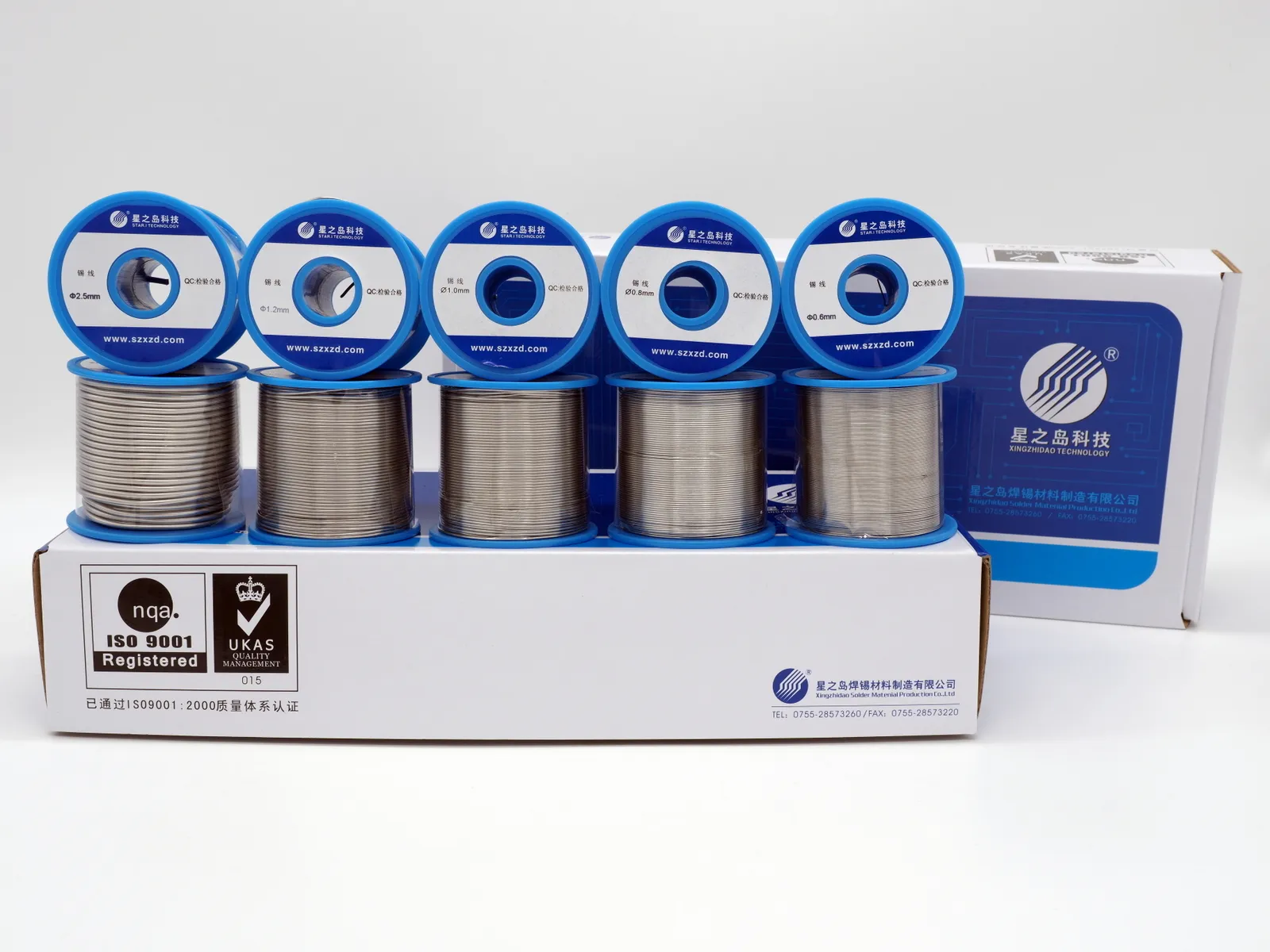
Solder Wire
STAR.I solder wire covers Sn-Cu, Sn-Ag, Sn-Cu-Ni-Ce and Sn-Ag-Cu alloys, single or three-core, rosin, no-clean or water-soluble flux, 0.3–1.2 mm.
Learn more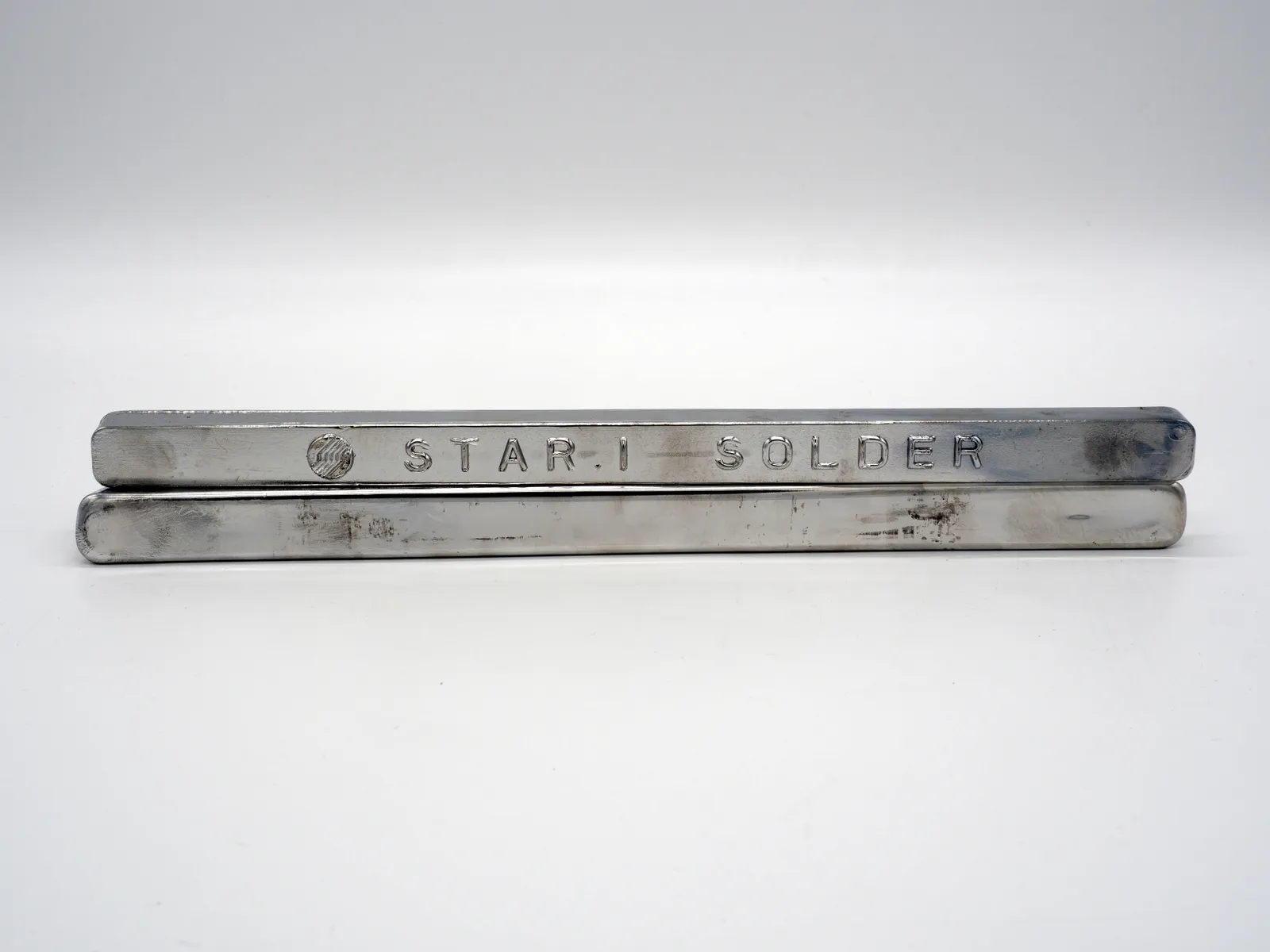
Solder Bar
STAR.I solder bars use high-purity metals and vacuum deoxidation: lead-free, leaded, matte, low-temperature, high-temperature and high-antioxidant types.
Learn more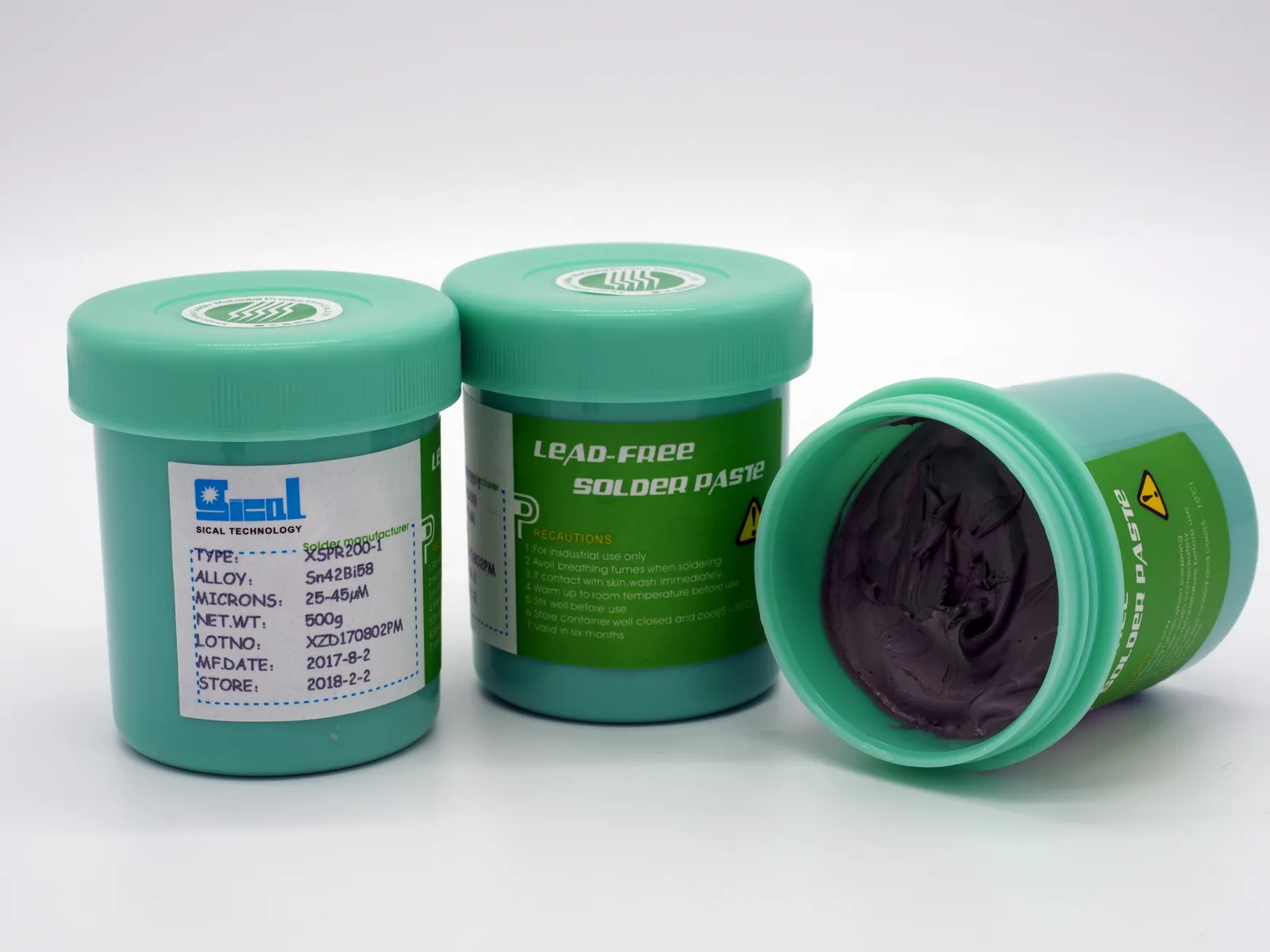
Solder Paste
STAR.I supplies lead-free and leaded SMT solder paste, including rosin, no-clean and water-soluble types. Includes storage, printing and reflow guidance.
Learn moreNeed help selecting materials for your process?
Tell us your soldering method, alloy, product form and capacity. STAR.I’s technical team will help narrow the selection and provide samples and technical data.