
Solder Bar
Solder Bars: Lead-Free, High-Antioxidant and High-Temperature
Solder bars are the main solder form for wave soldering, hot-dip tinning and wire tinning. STAR.I bars use high-purity metals and vacuum deoxidation, and are available as lead-free, leaded, matte, low-temperature, high-temperature and high-antioxidant types. Sn-Cu-Ni-Ce is recommended for lead-free wave soldering, with lead controlled below 1000 ppm.
Key facts
- Raw material and process
- High-purity metals, vacuum deoxidation
- Types
- Lead-free / leaded / matte / low-temp / high-temp / high-antioxidant
- Recommended lead-free alloy
- Sn-Cu-Ni-Ce
- Lead content
- Below 1000 ppm (lead-free series)
- Typical use
- Wave soldering, hot-dip tinning, transformer tinning
Manufacturing and characteristics
STAR.I solder bars are made from high-purity metal raw materials and vacuum-deoxidized under strict quality control to limit oxidation and metallic/non-metallic impurities.
The bars have a smooth, uniform surface and high purity. They melt with good fluidity and wettability, produce bright joints and leave little oxide dross, making them suitable for demanding wave soldering, hot-dip soldering and hand soldering.
Solder bar types
| Type | Key characteristics | Typical application |
|---|---|---|
| Lead-free bar | Sn-Cu or Sn-Cu-Ni-Ce, lead below 1000 ppm | Lead-free wave and hot-dip soldering |
| Leaded bar | Sn-Pb alloy, good wettability and wide process window | Leaded wave and hot-dip soldering, repair |
| Matte bar | Matte joint appearance for specific cosmetic requirements | Applications requiring a matte finish |
| Low-temperature bar | Low-melting alloy to reduce thermal damage | Heat-sensitive components, low-temperature soldering |
| High-temperature bar | Oxidation-resistant at high temperature, low dross | High-temperature wave, hot-dip and transformer tinning |
| High-antioxidant bar | Bright liquid surface, short wetting time, high spreading | Solder pots running hot for long periods |
| Special-purpose bar | Custom alloy and shape | Special soldering and surface finishing |
Why Sn-Cu-Ni-Ce for lead-free wave soldering?
Sn-Cu-Ni-Ce is a common lead-free alloy for wave soldering. STAR.I recommends Sn-Cu-Ni-Ce lead-free bars produced with refining and anti-oxidation technology, with lead controlled below 1000 ppm, to help customers transition to lead-free processing.
Compared with Sn-Cu0.7, adding Ni and Ce generally improves wettability, oxidation resistance and joint appearance. Actual performance should still be validated with the solder pot, flux and PCB finish.
High-antioxidant and high-temperature bars
High-antioxidant bars keep a bright, mirror-like liquid surface below 300°C, with short wetting time and higher spreading than ordinary solder. The antioxidant addition improves joint brightness and appearance, making the bars suitable for PCB wave and hot-dip soldering.
High-temperature bars maintain a silver-white, mirror-like surface at 450°C and generate about one-seventh the dross of ordinary bars. They suit high-temperature wave soldering, hot-dip soldering and transformer lead tinning through self-fluxing enameled wire.
High temperature accelerates flux evaporation and solder oxidation. Control pot temperature, dross removal intervals and flux supply together.
Solder pot maintenance: calculating pure tin additions
The tin content of solder decreases over time through oxidation, and tin oxide accumulates in the pot. Regularly check the alloy composition and add pure tin to keep the alloy within specification.
Estimate the pure tin addition with: T = W × (A − B) ÷ (100 − A), where T is the pure tin to add, W is the solder weight in the pot, A is the specified tin percentage and B is the measured tin percentage.
| Parameter | Value |
|---|---|
| Solder weight W | 500 kg |
| Specified tin content A | 63% |
| Measured tin content B | 61.5% |
| Calculated addition T | 500 × (63 − 61.5) ÷ (100 − 63) ≈ 20.3 kg |
The formula is an estimate. Confirm the addition with spectrometer results, alloy type and pot condition, and re-check after mixing.
Usage recommendations
- Set pot temperature according to the alloy and process; avoid prolonged overheating.
- Check the alloy composition regularly and adjust with pure tin or alloy additions.
- Remove dross regularly and keep the pot clean; high-antioxidant bars reduce dross generation.
- Do not mix different alloys, which can shift composition and melting point.
- Run a pilot batch and joint reliability check before mass production.
Typical applications
- Wave soldering
- Hot-dip soldering
- Transformer and wire tinning
- Power supplies and adapters
- Automotive and industrial electronics
- Electroplating and surface finishing
FAQ
What solder bar types are available?
STAR.I supplies lead-free, leaded, matte, low-temperature, high-temperature, high-antioxidant and special-purpose solder bars.
Which alloy is recommended for lead-free wave soldering?
STAR.I recommends Sn-Cu-Ni-Ce lead-free bars with lead controlled below 1000 ppm. Sn-Cu0.7 can also be evaluated for the product and process.
How do I calculate the pure tin addition?
Use T = W × (A − B) ÷ (100 − A). For a 500 kg pot at 63% specified tin and 61.5% measured tin, add about 20.3 kg of pure tin. Confirm with spectrometer results.
What are the benefits of high-antioxidant bars?
High-antioxidant bars keep a bright liquid surface, shorten wetting time and increase spreading below 300°C. High-temperature bars generate about one-seventh the dross of ordinary bars at 450°C.
How should solder bars be stored?
Store in a dry, ventilated area free of corrosive gases. Keep different alloys separated and clearly labelled to prevent mixing.
Related products
Explore compatible materials
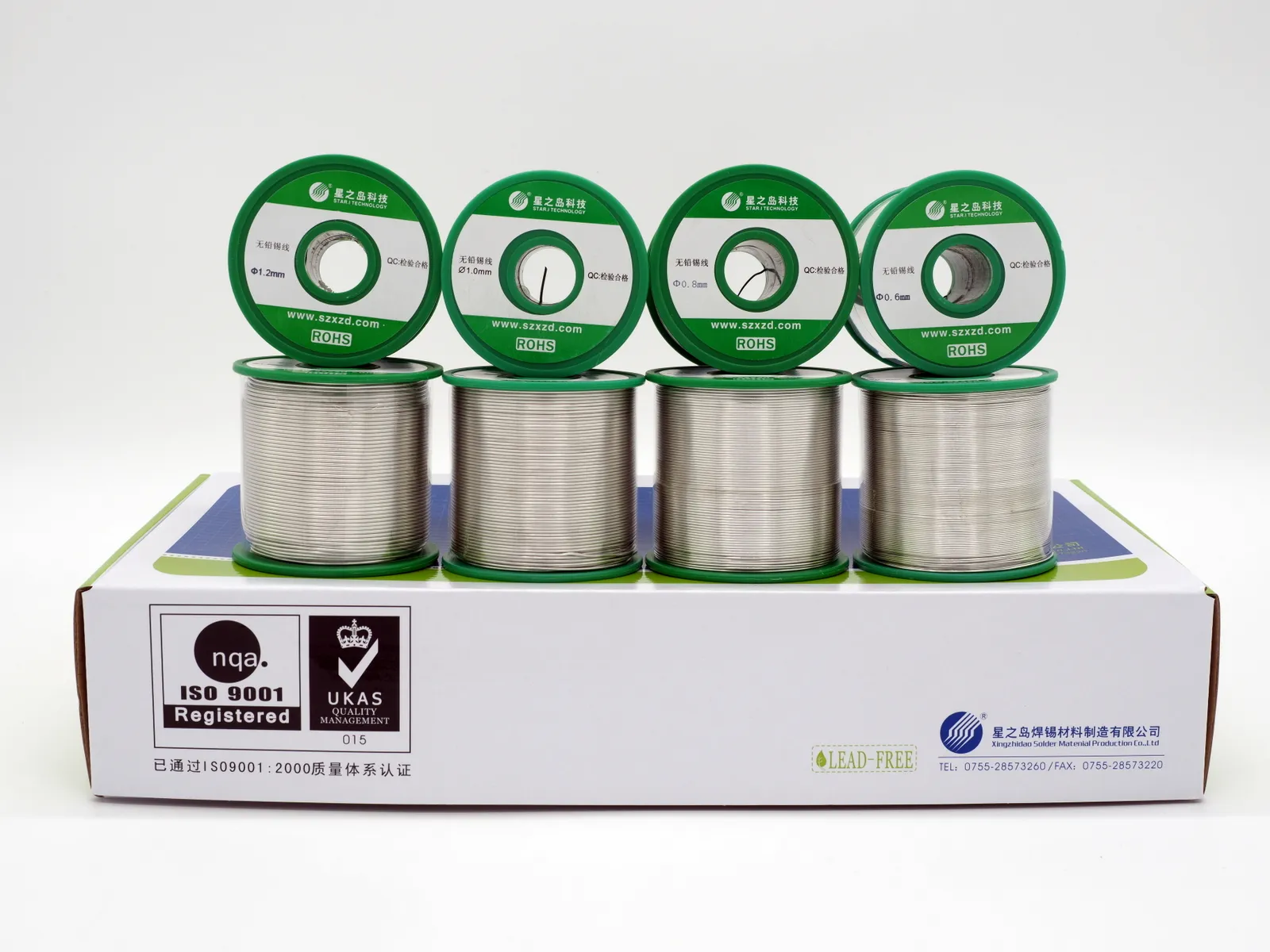
Lead-Free Solder
STAR.I supplies lead-free solder bars, wire and paste in Sn-Ag-Cu, Sn-Cu and Sn-Cu-Ni-Ce alloys. Lead is controlled below 1000 ppm, with SGS testing.
Learn more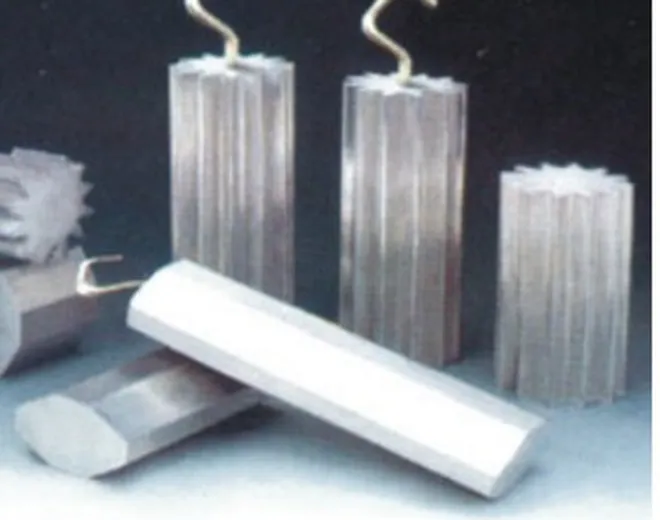
Solder Materials
STAR.I supplies electroplating anodes, tin-plated copper wire and custom alloy wire, including star, octagonal, olive, round and rectangular anode sections.
Learn more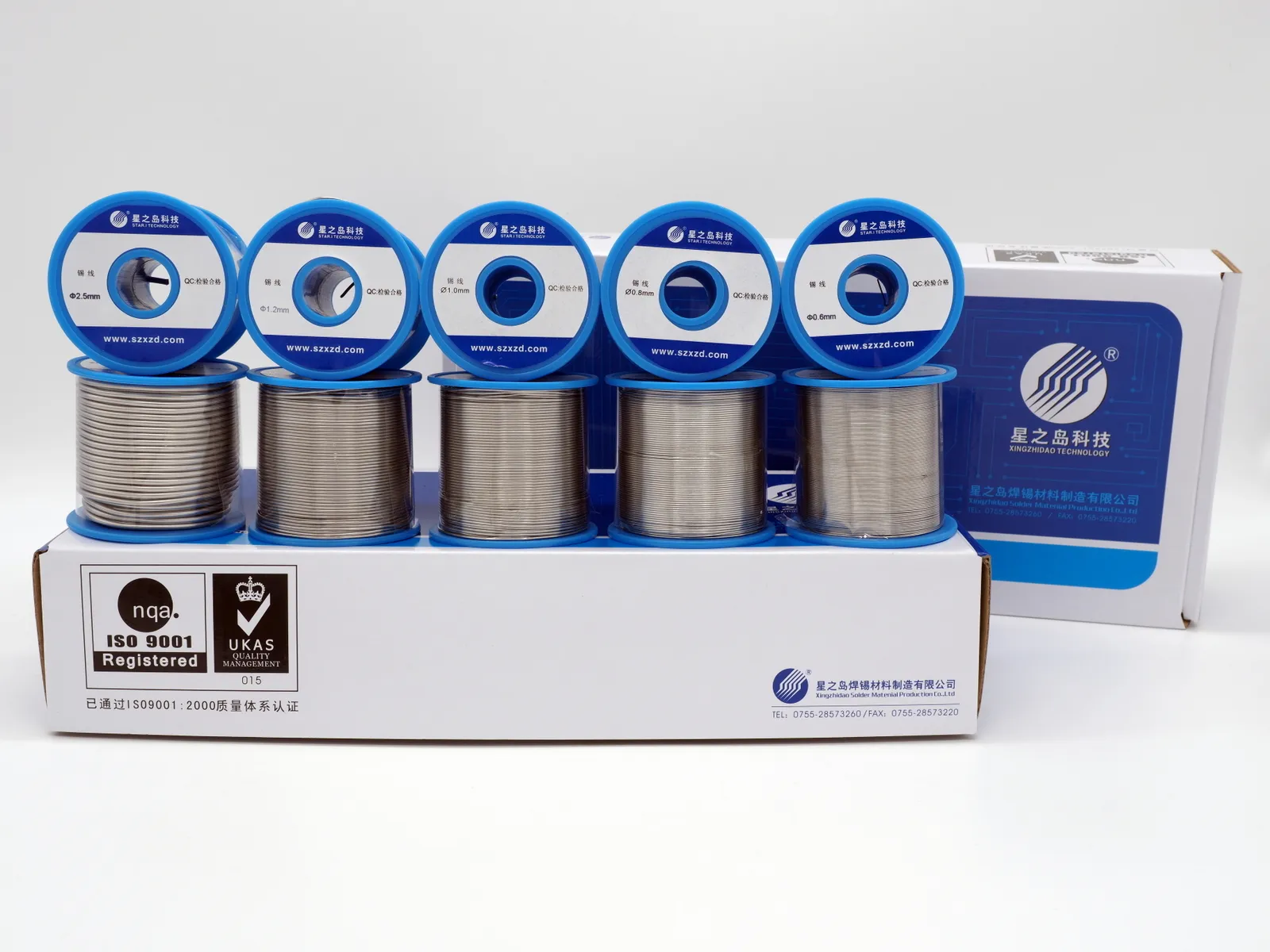
Solder Wire
STAR.I solder wire covers Sn-Cu, Sn-Ag, Sn-Cu-Ni-Ce and Sn-Ag-Cu alloys, single or three-core, rosin, no-clean or water-soluble flux, 0.3–1.2 mm.
Learn moreNeed help selecting materials for your process?
Tell us your soldering method, alloy, product form and capacity. STAR.I’s technical team will help narrow the selection and provide samples and technical data.