
Solder Materials
Solder Materials: Anodes, Tin-Plated Copper Wire & Alloy Wire
In addition to paste, wire and bars, STAR.I supplies electroplating anodes, tin-plated copper wire and alloy wire. Anodes use imported electrolytic alloy with low impurities and oxidation, in star, octagonal, olive, round and rectangular sections. Tin-plated copper wire suits resistors, capacitors, photosensitive devices, diodes and transistor sensors. Alloy wire can be made to customer dimensions and models.
Key facts
- Main products
- Electroplating anodes, tin-plated copper wire, alloy wire
- Anode shapes
- Star, octagonal, olive, round, rectangular
- Anode material
- Imported electrolytic alloy, high purity, low impurities
- Alloy systems
- Lead-free and Sn-Pb
- Customization
- Alloy wire made to drawing or model
Electroplating anodes
STAR.I electroplating anodes use imported electrolytic alloy with high composition and very low impurities. Strict quality control minimizes oxidation and produces a dense alloy structure that resists separation.
The anodes suit the electroplating industry and are available in star, octagonal, olive, round and rectangular sections to match plating tanks, jigs and process requirements.
Tin-plated copper wire
STAR.I tin-plated copper wire is available in a full range of diameters for resistors and capacitors, photosensitive devices, diodes, transistor sensors and other component leads.
The tin coating improves solderability and oxidation resistance for subsequent hand, wave or reflow soldering. Diameter, coating thickness and packaging can be confirmed to customer requirements.
Alloy wire
STAR.I alloy wire is available in multiple specifications, styles and hardness levels. It is divided into process alloy wire and electroplating alloy wire, mainly used for decorative frames and ornaments.
Wire can be made to customer dimensions and models. For volume orders, provide a sample or drawing to confirm alloy, diameter, surface condition and packaging.
Lead-free alloys and available forms
The table lists common lead-free alloys and the product forms available. Select according to the soldering method and reliability requirements.
| Alloy (wt%) | Melting point (°C) | Paste | Bar | Solid wire | Flux-core wire |
|---|---|---|---|---|---|
| Sn-3Cu | 227–320 | — | ✓ | ✓ | ✓ |
| Sn-5Sb | 230–240 | — | ✓ | ✓ | ✓ |
| Sn-58Bi | 138 | ✓ | — | — | — |
| Sn-50In | 117–125 | ✓ | ✓ | ✓ | ✓ |
| Sn-Ag-Cu | 215–220 | ✓ | ✓ | ✓ | ✓ |
| Sn-Ag-Cu-Ce | 215–220 | — | ✓ | ✓ | ✓ |
| Sn-Cu-Ni-Ce | 227 | — | ✓ | ✓ | ✓ |
| Sn-Zn-Bi | 180–198 | — | ✓ | ✓ | ✓ |
| Sn-Ag-Cu-Sb | 210–220 | — | ✓ | ✓ | — |
| Sn-Ag-Cu-Bi | 207–215 | — | ✓ | ✓ | — |
Sn-Pb alloys and available forms
For processes that still require leaded solder, STAR.I offers Sn-Pb alloys. The forms and melting points below are for reference; leaded products are not suitable for RoHS lead-free processes.
| Alloy (wt%) | Melting point (°C) | Paste | Bar | Solid wire | Flux-core wire |
|---|---|---|---|---|---|
| Sn63/Pb37 | 183 | ✓ | ✓ | ✓ | ✓ |
| Sn60/Pb40 | 183–190 | — | ✓ | ✓ | ✓ |
| Sn55/Pb45 | 183–203 | — | ✓ | ✓ | ✓ |
| Sn50/Pb50 | 183–215 | — | ✓ | ✓ | ✓ |
| Sn45/Pb55 | 183–227 | — | ✓ | ✓ | ✓ |
| Sn40/Pb60 | 183–238 | — | ✓ | ✓ | ✓ |
| Sn35/Pb65 | 183–248 | — | ✓ | ✓ | ✓ |
| Sn30/Pb70 | 183–258 | — | ✓ | ✓ | ✓ |
| Sn25/Pb75 | 183–266 | — | ✓ | ✓ | ✓ |
| Sn20/Pb80 | 183–279 | — | ✓ | ✓ | ✓ |
“✓” indicates availability; “—” indicates the form is not listed. Confirm the final supply form in the order and technical agreement.
Quality control and customization
- Anodes use imported electrolytic alloy with controlled impurities and oxidation for a dense structure.
- Tin-plated copper wire and alloy wire can be specified by diameter, hardness, surface condition and packaging.
- Alloy wire can be made to customer dimensions and models.
- For volume orders, provide the application, soldering process and sample requirements to confirm the grade.
Typical applications
- Electroplating anodes
- Resistor and capacitor leads
- Photosensitive devices and sensors
- Diode and transistor leads
- Decorative frames and ornaments
- Component surface finishing
FAQ
What anode shapes are available?
STAR.I electroplating anodes are available in star, octagonal, olive, round and rectangular sections.
What material are the anodes made from?
The anodes use imported electrolytic alloy with high composition and low impurities. Strict quality control minimizes oxidation and produces a dense alloy structure.
What is tin-plated copper wire used for?
It is used for resistor and capacitor leads, photosensitive devices, diode and transistor sensors, and other component leads. Diameter and coating can be confirmed to the process.
Can alloy wire be customized?
Yes. STAR.I can make alloy wire to customer dimensions and models, in process alloy wire and electroplating alloy wire types.
Which product forms are available for lead-free alloys?
Availability varies by alloy. For example, Sn-Ag-Cu is available as paste, bar, solid wire and flux-core wire, while Sn-58Bi is supplied mainly as paste. See the table or contact sales.
Related products
Explore compatible materials
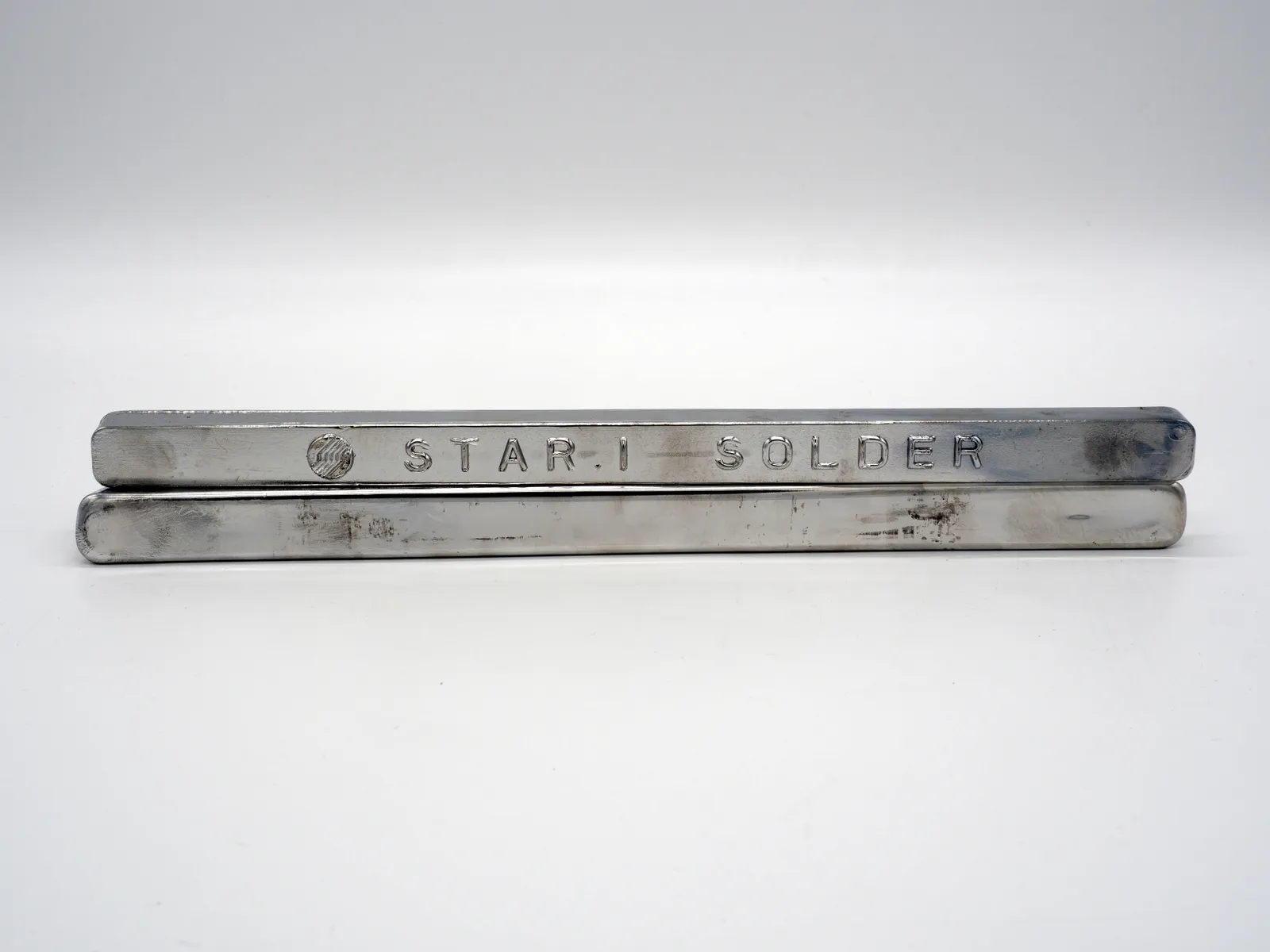
Solder Bar
STAR.I solder bars use high-purity metals and vacuum deoxidation: lead-free, leaded, matte, low-temperature, high-temperature and high-antioxidant types.
Learn more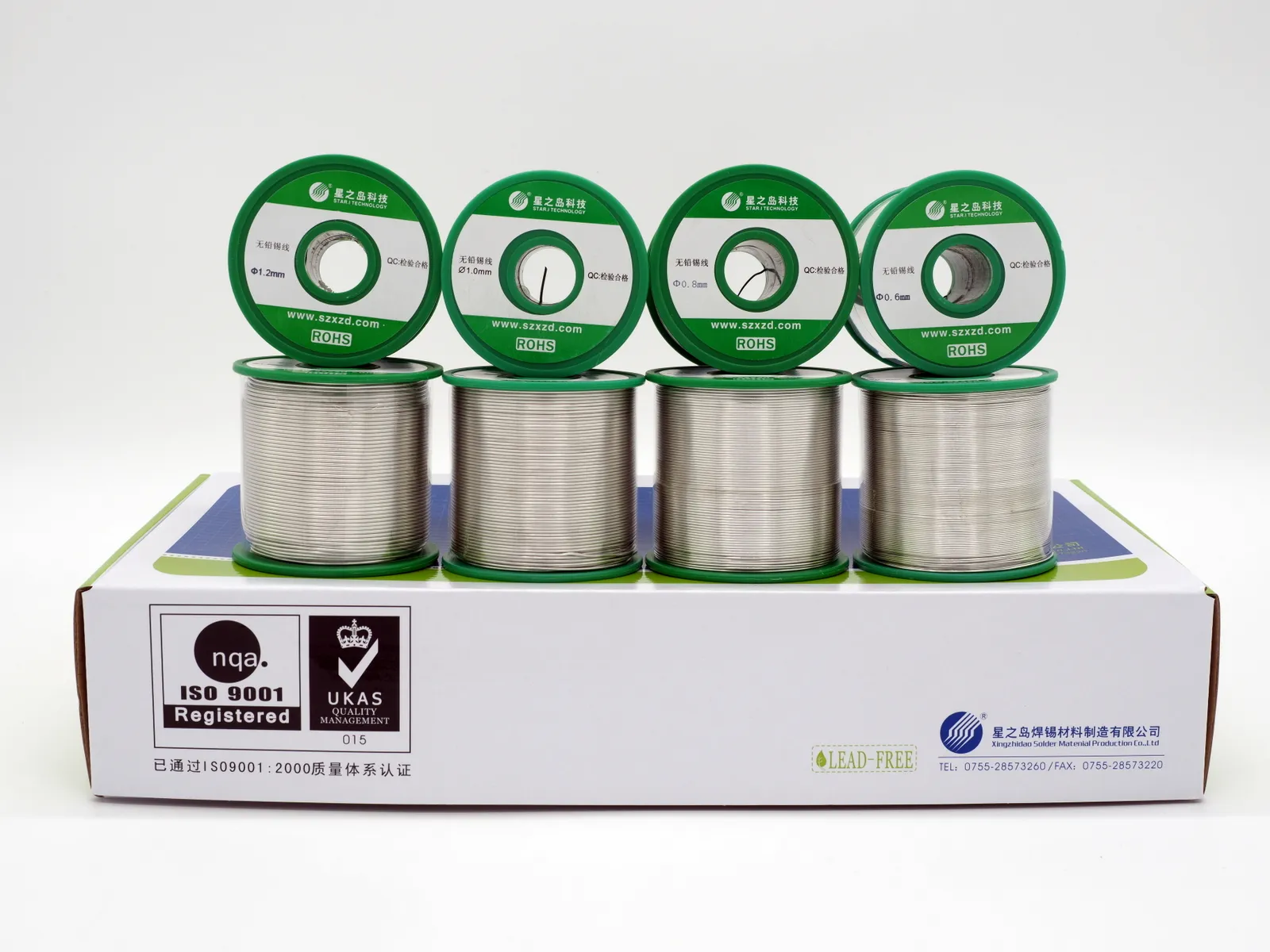
Lead-Free Solder
STAR.I supplies lead-free solder bars, wire and paste in Sn-Ag-Cu, Sn-Cu and Sn-Cu-Ni-Ce alloys. Lead is controlled below 1000 ppm, with SGS testing.
Learn more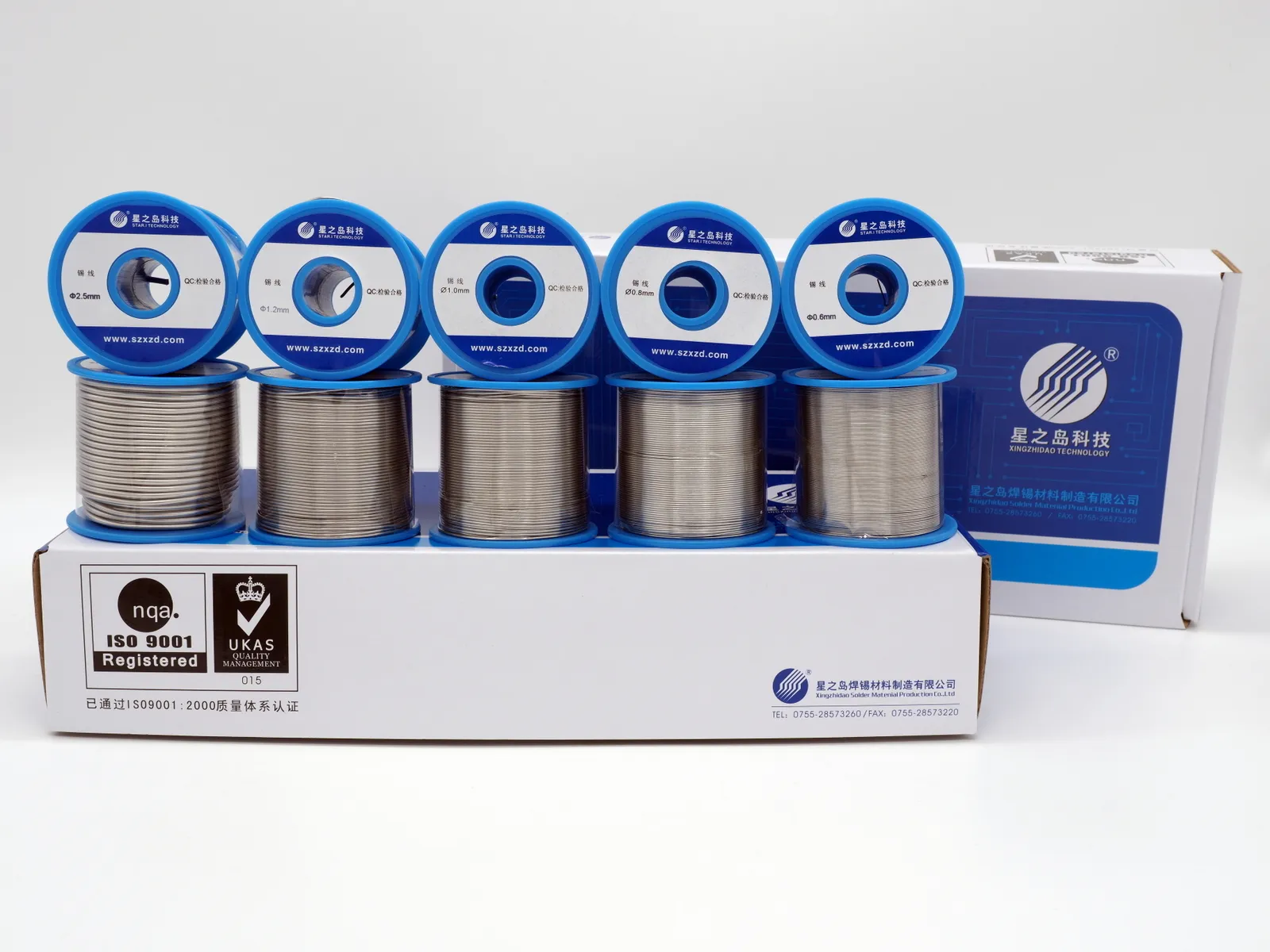
Solder Wire
STAR.I solder wire covers Sn-Cu, Sn-Ag, Sn-Cu-Ni-Ce and Sn-Ag-Cu alloys, single or three-core, rosin, no-clean or water-soluble flux, 0.3–1.2 mm.
Learn moreNeed help selecting materials for your process?
Tell us your soldering method, alloy, product form and capacity. STAR.I’s technical team will help narrow the selection and provide samples and technical data.