
Solder Wire
Solder Wire: Alloy, Flux Type, Core Count and Diameter
Solder wire consists of a solder alloy with an internal flux core and is mainly used for hand soldering, iron soldering and rework. STAR.I offers lead-free and solid wire in Sn-Cu, Sn-Ag, Sn-Cu-Ni-Ce and Sn-Ag-Cu alloys with lead below 1000 ppm, single or three cores, rosin/no-clean/water-soluble flux, and standard diameters from 0.3 to 1.2 mm.
Key facts
- Alloys
- Sn-Cu, Sn-Ag, Sn-Cu-Ni-Ce, Sn-Ag-Cu
- Lead content
- Below 1000 ppm
- Flux
- Rosin R/RMA/RA, no-clean, water-soluble
- Cores
- Single or three-core
- Standard diameter
- 0.3–1.2 mm (0.3–0.5 mm customizable)
Solder wire structure: alloy and flux core
Flux-core solder wire consists of an outer solder alloy and an internal flux. During soldering, the flux activates first, removes oxides from the pad and lead, and helps the molten solder wet and form a joint.
STAR.I offers single-core and three-core wire. Three-core wire distributes flux more evenly and suits continuous soldering and longer seams; single-core wire is simpler and suits routine hand soldering. Flux content can be specified as standard, medium or low.
Which solder wire alloy should I choose?
Match the alloy to the components, PCB finish and service temperature. Lead-free hand soldering commonly uses Sn-Cu, Sn-Ag-Cu and Sn-Cu-Ni-Ce; Sn63Pb37 remains available for leaded processes.
| Alloy (wt%) | Melting point (°C) | Characteristics and typical use |
|---|---|---|
| Sn63Pb37 | 183 | Eutectic leaded alloy; excellent wettability and wide process window; leaded hand soldering and rework |
| Sn-Cu0.7 | 227 | Low-cost lead-free alloy; general hand soldering and wave-solder touch-up |
| Sn-Ag3.0Cu0.5 | 217–220 | SAC305-type; balanced strength and wettability; precision electronics and rework |
| Sn-Ag3.5 | 221 | Near-eutectic; good thermal fatigue resistance |
| Sn-Cu-Ni-Ce | 227 | STAR.I recommended lead-free system for wave and hot-dip soldering |
| Sn-58Bi | 138 | Low-temperature lead-free alloy for heat-sensitive parts; assess brittleness |
Flux types: rosin-core, no-clean and water-soluble
The flux type affects soldering performance, residue and cleaning. Common activity levels are R (non-activated), RMA (moderately activated) and RA (highly activated). By cleaning method, wire is available as rosin-core, no-clean or water-soluble.
- Rosin-core wire: made with high-quality rosin; good wettability, reliable joints and wide application.
- No-clean wire: low residue, high insulation resistance and low ionic contamination for no-clean assembly.
- Water-soluble wire: fast soldering and bright joints; residues are readily removed with warm water.
- Lead-free wire: Sn-Cu, Sn-Ag, Sn-Cu-Ni-Ce and Sn-Ag-Cu alloys with lead below 1000 ppm.
Higher flux activity generally means stronger oxide removal, but also more corrosive residue and greater cleaning requirements. Select according to the product reliability class.
How to choose diameter and core count
Diameter affects deposition rate, heat input and operator feel. Use finer wire for small joints and dense components; use thicker wire for larger joints and high heat dissipation.
| Diameter (mm) | Typical application |
|---|---|
| 0.3 | Micro joints, fine-pitch components, precision rework |
| 0.5 | Precision electronics, connectors and small pads |
| 0.6 | General PCB hand soldering |
| 0.8 | Medium joints and through-hole components |
| 1.0 | Larger pads, ground joints and heat-dissipating connections |
| 1.2 | Large joints, wire and terminal soldering |
0.3–0.5 mm diameters can be customized. Adjust feed rate and iron temperature to the alloy, pad thermal mass and operator technique.
Usage and storage
- Store in a cool, dry place away from moisture and direct sunlight.
- Keep the work area ventilated and avoid inhaling flux fumes.
- Adjust iron temperature to the alloy and joint thermal mass; excessive temperature can evaporate the flux prematurely.
- If cleaning is required, use warm water or a suitable cleaner according to the flux type.
- Lead-free wire generally melts higher than Sn-Pb wire; increase iron temperature modestly and shorten dwell time.
Typical applications
- Hand and iron soldering
- Electronic rework and touch-up
- Connectors and wire harnesses
- Through-hole assembly
- Precision and fine-pitch joints
- LED and optoelectronic devices
FAQ
What standard diameters are available?
STAR.I solder wire is available in 0.3, 0.5, 0.6, 0.8, 1.0 and 1.2 mm diameters. 0.3–0.5 mm can be customized.
What is the difference between single-core and three-core wire?
Single-core wire has one flux core and a simple structure. Three-core wire has three flux cores for more even flux distribution, suiting continuous soldering and longer seams. Both can be supplied with different flux contents.
Does no-clean wire need cleaning?
No-clean wire leaves low residue and generally does not require cleaning. For high-reliability, medical or harsh-environment products, evaluate the residue and reliability requirements.
How is water-soluble wire cleaned?
Residues from water-soluble wire can be removed with warm water. Dry the assembly thoroughly afterwards to avoid moisture-related corrosion or leakage.
What is the lead content of lead-free wire?
STAR.I lead-free solder wire is controlled below 1000 ppm lead. Test reports can be provided on request.
Related products
Explore compatible materials
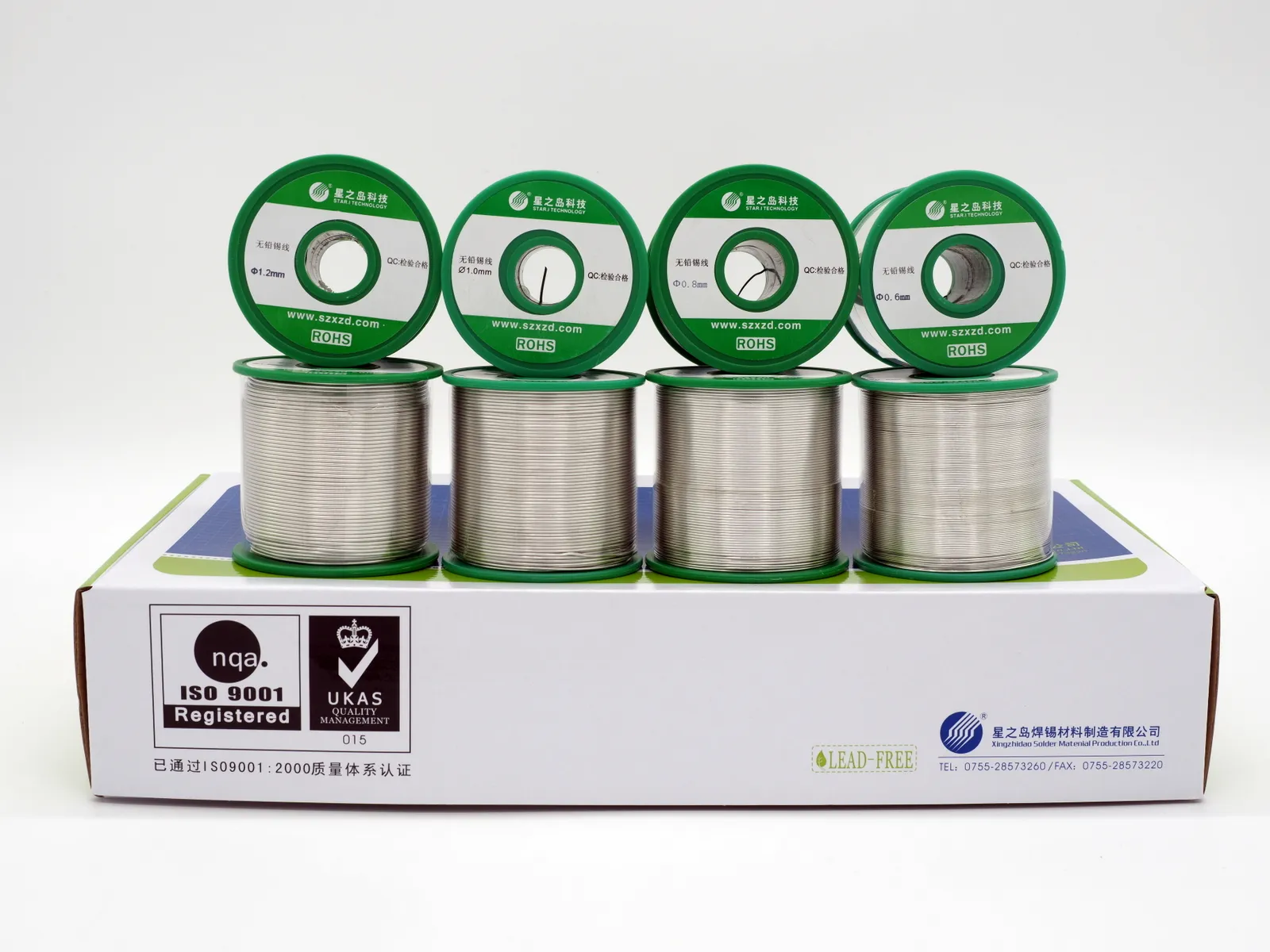
Lead-Free Solder
STAR.I supplies lead-free solder bars, wire and paste in Sn-Ag-Cu, Sn-Cu and Sn-Cu-Ni-Ce alloys. Lead is controlled below 1000 ppm, with SGS testing.
Learn more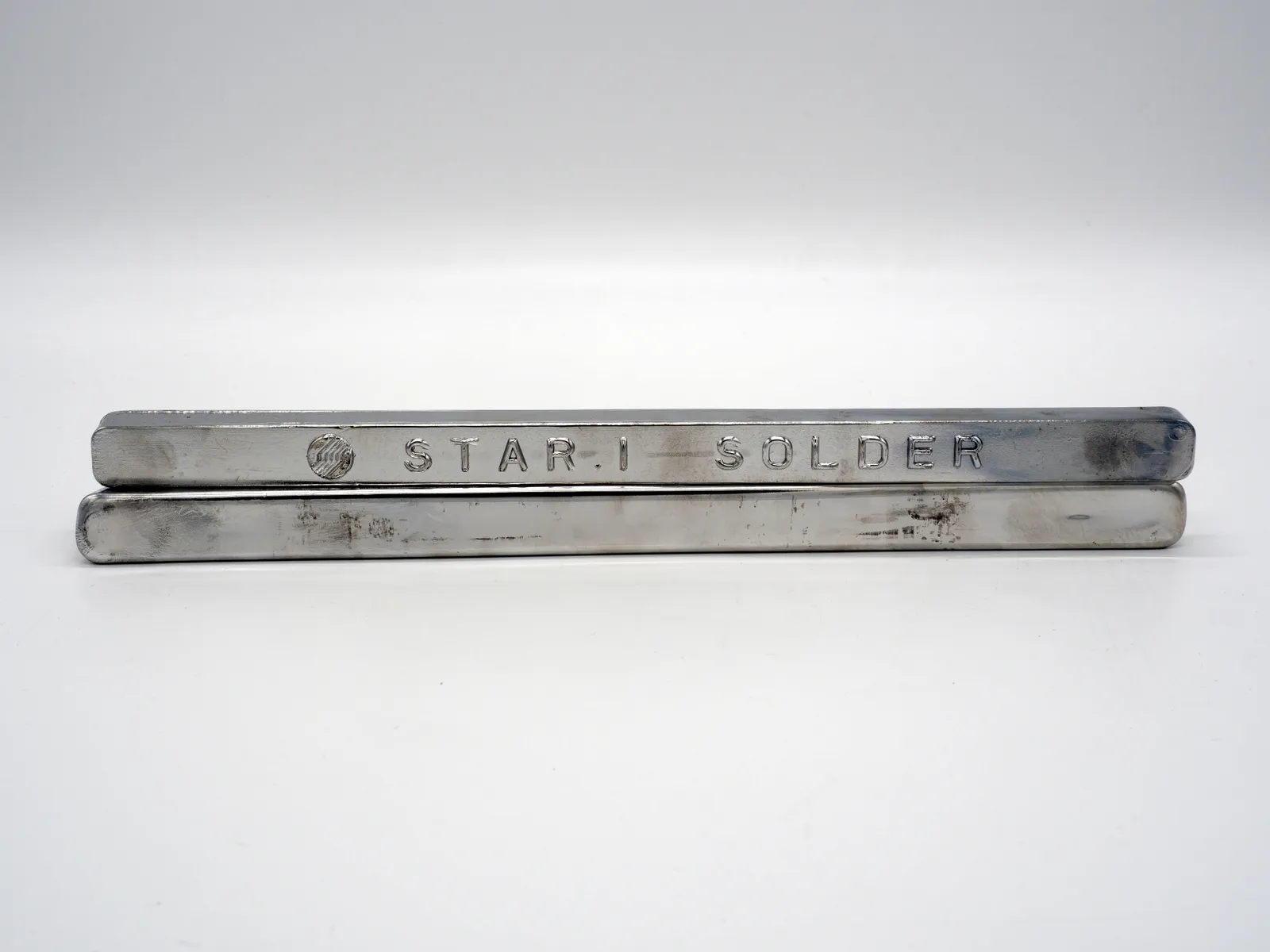
Solder Bar
STAR.I solder bars use high-purity metals and vacuum deoxidation: lead-free, leaded, matte, low-temperature, high-temperature and high-antioxidant types.
Learn more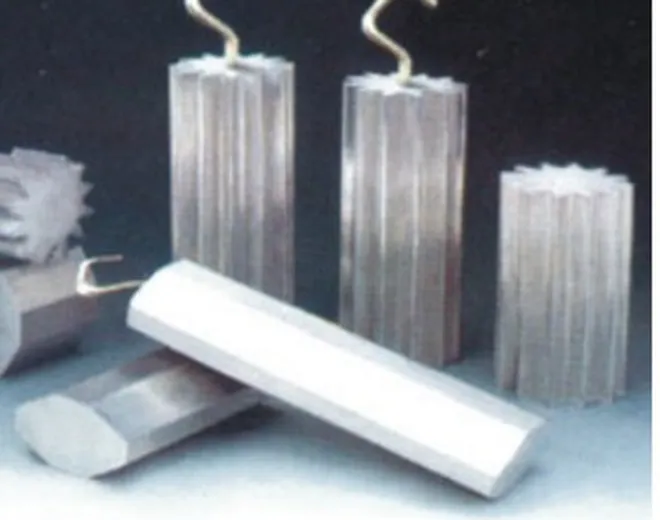
Solder Materials
STAR.I supplies electroplating anodes, tin-plated copper wire and custom alloy wire, including star, octagonal, olive, round and rectangular anode sections.
Learn moreNeed help selecting materials for your process?
Tell us your soldering method, alloy, product form and capacity. STAR.I’s technical team will help narrow the selection and provide samples and technical data.