Key takeaways
- Dross is the product of tin oxidation; it cannot be eliminated completely. The goal is to slow generation and reduce metal loss.
- Higher pot temperature accelerates oxidation; control temperature first, within the process window.
- Flux type and volume, exposed pot area, wave height and nitrogen protection all affect dross.
- High-antioxidant bars reduce oxidation below 300°C; high-temperature bars generate about one-seventh the dross at 450°C.
- Regular dross removal, no re-melting of dross, impurity control and avoiding alloy mixing matter more than changing bars alone.
Dross is a fact of life in lead-free wave soldering. It increases solder consumption, affects pumps and nozzles, changes joint appearance and adds maintenance work.
Start with the right expectation: dross cannot be eliminated completely. Molten solder oxidizes whenever it meets air. The practical goal is to slow generation, reduce the metal lost with dross, and avoid operational habits that make the problem worse.
Where does dross come from?
The molten solder surface reacts with oxygen to form an oxide film. Wave motion, pumps and boards disturb the film, which then mixes with entrained metal to form loose dross. Dross contains both oxides and recoverable metal, so dross weight is not equal to pure tin loss — but more dross means more metal loss and higher cost.
Main factors:
- Temperature: higher temperature accelerates oxidation.
- Exposed area and agitation: pot surface, wave height and pump action bring fresh solder into contact with air.
- Flux: type, volume and spray uniformity affect the oxide film and residue.
- Alloy and impurities: alloys differ in oxidation resistance; copper, iron and other impurities change dross behaviour.
- Equipment and operation: pot sealing, nitrogen protection, dross removal frequency and whether dross is pressed back into the pot.
Five areas to check and improve
1. Temperature
Lower the pot temperature as far as wetting and through-hole filling allow. Prolonged overheating increases dross, evaporates flux faster and stresses components and boards.
- Measure the actual wave contact temperature with a profiler, not just the setpoint.
- Avoid raising temperature repeatedly to “make it solder better.”
- Check heaters and temperature control for drift.
2. Flux
Too little flux leaves oxide and causes poor wetting; too much increases residue, spatter and dross. Check:
- Flux type compatibility with the alloy and PCB finish;
- Spray volume, atomization and uniformity;
- Preheat, so flux activates fully without evaporating too early;
- Contamination or expiry.
3. Alloy and impurities
Alloys differ in oxidation resistance. STAR.I recommends Sn-Cu-Ni-Ce for lead-free wave soldering; for long high-temperature runs, evaluate high-antioxidant or high-temperature bars.
Impurity control matters too. Accumulated copper, iron, zinc and other elements change melting point, wetting and dross. Test with a direct-reading spectrometer and adjust with the pure tin formula.
4. Equipment and atmosphere
- Check pot level and wave height.
- Check pumps, nozzles and baffles for excessive agitation.
- Evaluate nitrogen protection against its cost and actual benefit.
- Check pot sealing and exhaust to avoid drawing air into the solder.
5. Operation and maintenance
- Remove dross regularly with dedicated tools; do not press it back into the pot.
- Store alloys separately and clean the pot when changing alloys.
- Avoid wet tools or cold ingots entering the pot.
- Record replenishment, testing and dross removal to build trend data.
High-antioxidant vs high-temperature bars
STAR.I product data:
| Type | Characteristics | Typical use |
|---|---|---|
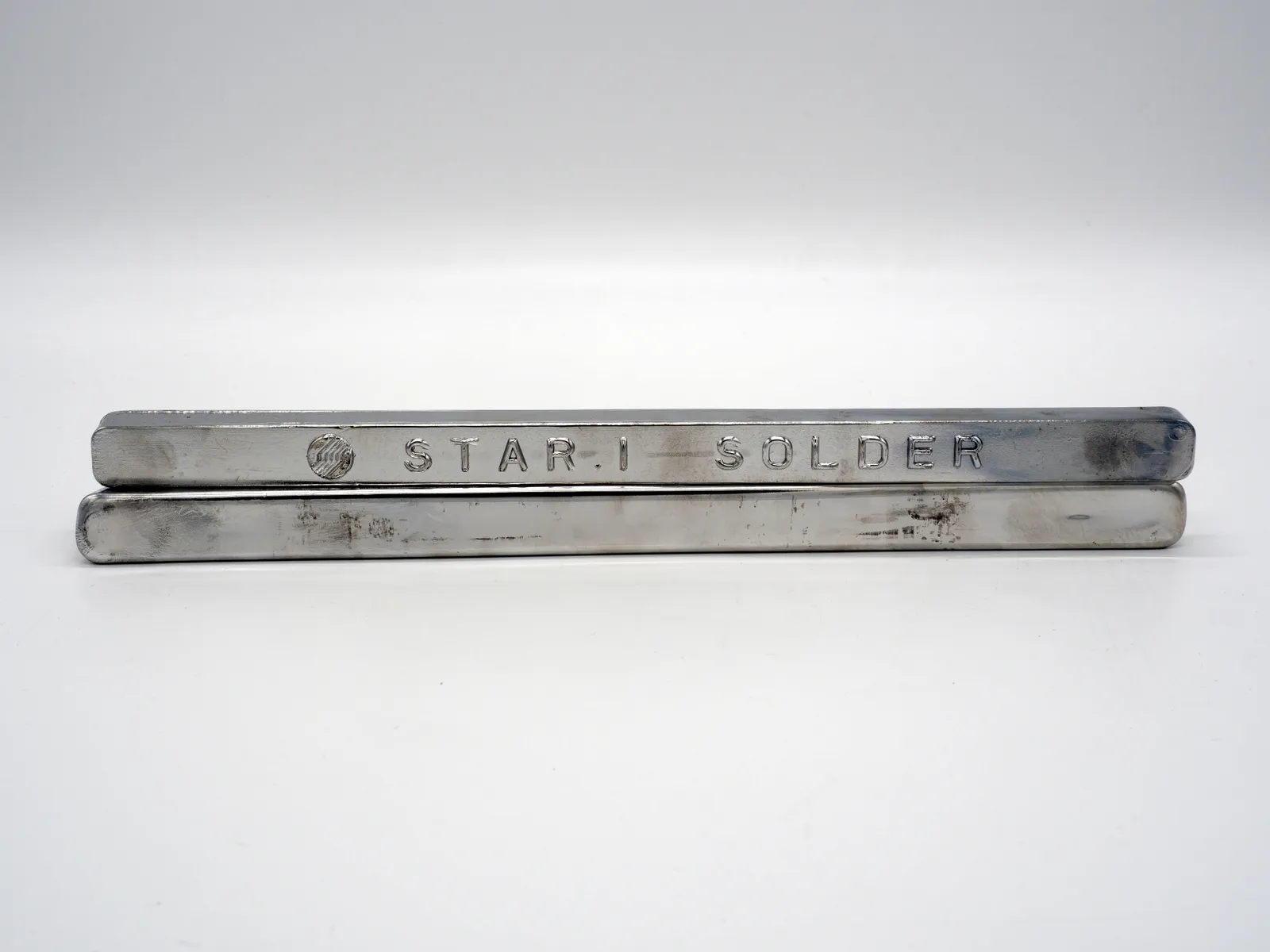
| High-antioxidant bar | Bright mirror-like surface below 300°C, short wetting time, higher spreading than ordinary solder | Pots running hot for long periods; wave soldering with appearance requirements |
| High-temperature bar | Silver-white mirror surface at 450°C; dross about one-seventh of ordinary bars | High-temperature wave, hot-dip and transformer tinning |
| Lead-free bar (Sn-Cu-Ni-Ce) | Lead below 1000 ppm | Lead-free wave and hot-dip soldering |
Do not choose on dross alone. Confirm:
- Alloy melting point vs existing pot temperature;
- Compatibility with PCB finish and flux;
- Joint strength, wetting and reliability;
- Supply stability and cost.
Dross handling and safety
- Collect dross in dry, dedicated containers.
- Do not return dross to the pot; use a professional recycling channel.
- Wear gloves and eye protection when handling dross.
- Keep dross storage away from ignition sources and moisture.
When to test or change materials
Add a pot composition test when:
- Dross increases sharply or changes form;
- Joints darken, wetting worsens or bridging increases;
- After replenishment, alloy change or a long shutdown;
- After changing flux type or supplier;
- On a regular schedule (for example weekly or monthly).
Conclusion
Prioritise four actions:
- Control temperature within the process window.
- Match flux type, volume and preheat.
- Control impurities with regular testing, calculated pure tin additions and no alloy mixing.
- Maintain the pot with regular dross removal, no re-melting and clean equipment.
High-antioxidant or high-temperature bars help, but they do not replace temperature, flux and maintenance control. If the problem persists, send the pot temperature, alloy, flux, PCB structure and dross photos to STAR.I’s technical team for analysis.
FAQ
How does dross form?
Molten solder reacts with oxygen to form an oxide film. The film, together with entrained metal, forms dross. Higher temperature, larger exposed area and more flux or impurities accelerate formation.
Can high-antioxidant bars eliminate dross?
No. They reduce oxidation and dross generation, but temperature, flux, air contact and impurities still produce dross. Regular removal and testing are still required.
Can dross be returned to the pot?
Not recommended. Dross contains oxides and impurities; returning it accelerates alloy degradation and increases defects and further dross. Use a professional recycling channel.
What pot temperature should lead-free wave soldering use?
Set it according to the alloy melting point, PCB thickness, component limits and flux. Sn-Cu alloys melt around 227°C, so the pot must be above that, but confirm the actual value by profiling and pilot runs; avoid prolonged overheating.
When should the pot composition be tested?
Establish a regular schedule and add tests when dross increases, joint appearance changes, after replenishment or alloy changes, after long shutdowns, or after changing flux type or supplier.
References
- STAR.I TECHNOLOGY solder bar product data (high-antioxidant and high-temperature bars)
- STAR.I TECHNOLOGY solder bar product data (pure tin addition formula)
- GB 8012 Cast tin-lead solder
- JIS Z 3283 Resin-core soft solder